
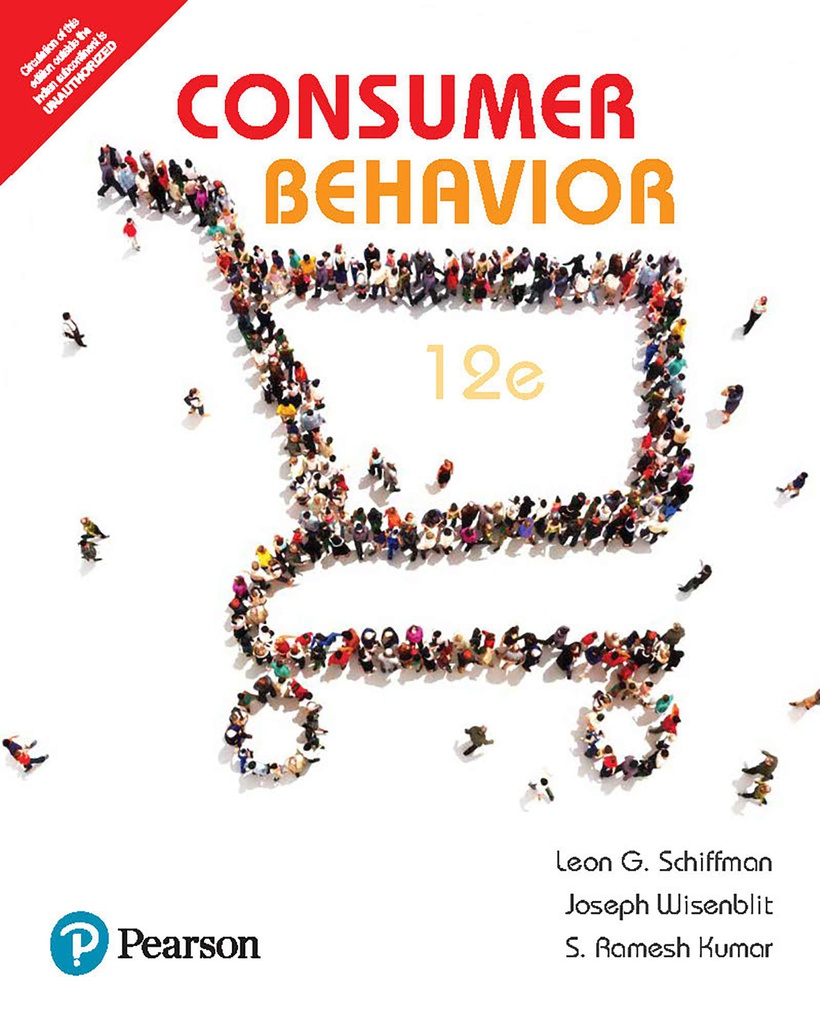
Consumer Behavior, 12/e
Consumer Behavior makes the learning associated with the mind experiential as it combines both the rational and the emotional parts of the brain. The realities and complexities of the Indian context make the study of consumer behavior an experiential reading. This edition of the book captures the behavioral nuances of the Indian marketing scenario with its unique cultural moorings, contemporary lifestyles, the vibrant side of mass marketing, the inroads of digitalization and the wide variety of contexts that are specific to these markets. This edition of the book has the following highlights: *Touch of Reality material that connects concepts with the reality of Indian context. *Brands-Consumer Behavior and digital interface across chapters. *Conceptual themes for important chapters (elaborate application of theoretical concepts). *Application of classical theories as well as the appreciation of contemporary research. *Several additional conceptual perspectives new to the edition. *An appreciation of online and off line consumer behavior that is compatible with the Indian context. *Elaborate class room case studies of Indian brands that are marketed that are published by Indian Institute of Management, Bangalore and marketed through Harvard Business School case collection that are used in several universities across the globe. *Online resources on several Indian examples published in previous editions that bring in diverse historical perspectives on brands.
Features:
- The impact of modern technology on marketing and consumer behavior, with coverage of the value exchange between consumers and marketers, astute positioning, and more.
- The role of new media providing students with a thorough understanding of how marketers can
- Eengage with consumers across social media platforms, manage successful, targeted campaigns, and track and measure the results.
- A new section exploring the eects that hidden motives have on consumer behavior in Chapter 3.
- Inclusion of updated cases and caselet features such as the “Touch of Reality” that connects concepts with the reality of Indian context and “Conceptual Theme” elaborating the application of theoretical concepts.
- Application of classical theories as well as the appreciation of contemporary research.
- Dozens of new ad illustrations, including of Indian brands like Tata, Soulful, Peter England, and Yakult, to help students visualize how the topics discussed aect real marketing decisions.
Contents:
Part I Consumers, Marketers, and technology
1. Consumer Behavior and Technology
2. Market Segmentation and Real-Time Bidding
Part II: the Consumer as an Individual
3. Consumer Motivation and Personality
4. Consumer Perception and Positioning
5. Consumer Learning
6. Consumer Attitude Formation and Change
Part III: Communication and Consumer behavior
7. Persuading Consumers
8. From Print and Broadcast to Social Media and Mobile
Advertising
9. Reference Groups and Communities, Opinion Leaders, and Word-of-Mouth
Part IV: Social and Cultural Settings
10. The Family and Its Social Standing
11. Cultural Values and Consumer Behavior
12. Cross-Cultural Consumer Behavior: An International Perspective
Part V: Consumer Decision-Making, Marketing ethics, and Consumer research
13. Consumer Decision-Making and Diffusion of Innovations
14. Marketers’ Ethics and Social Responsibility
15. Consumer Research
| Book | |
|---|---|
| Author | Schiffman |
| Pages | 704 |
| Year | 2019 |
| ISBN | 9789353069834 |
| Publisher | Pearson |
| Language | English |
| Uncategorized | |
| Edition | 12/e |
| Weight | 1 kg |
| Dimensions | 20.3 x 25.4 x 4.7 cm |
| Binding | Paperback |